Politicology podcast artwork
Media

Civly’s Zack Czajkowski on Politicology’s “Ballot Bots”

Civly co-founder Zack Czajkowski joins Ron Steslow to discuss chatbots, voter information, and how campaigns are adapting to AI.

Listen on Apple Podcasts
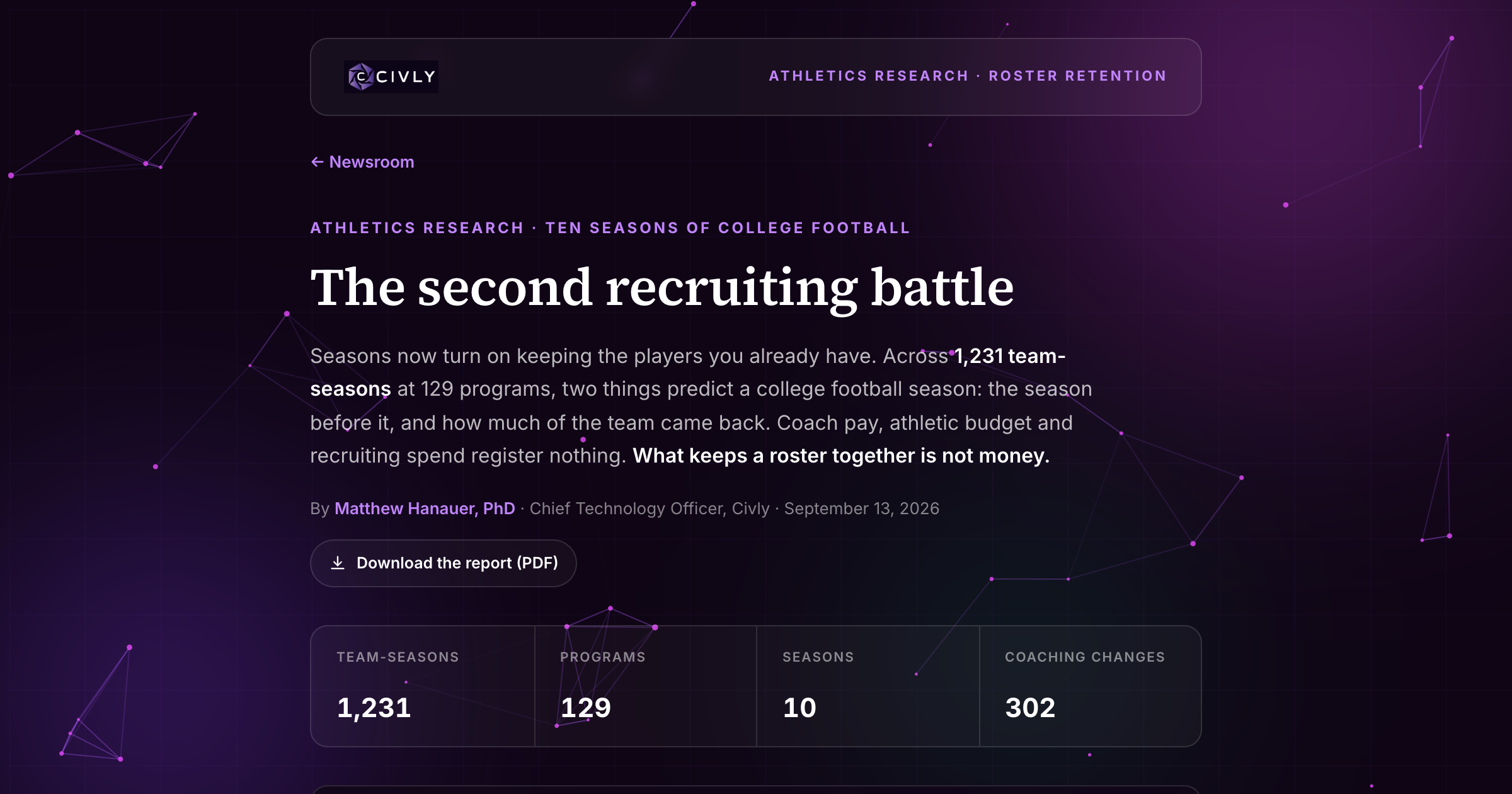
Across 1,231 team-seasons at 129 college football programs, winning the season before and keeping your players move a win total, while coach pay, athletic budget, recruited talent and recruiting spend show no effect
Research

The Second Recruiting Battle

Seasons now turn on keeping the players you already have. Across 1,231 team-seasons at 129 programs, a coaching change costs about six points of the roster, while doubling the recruiting budget, coach pay, athletic aid or the athletic budget moves nothing. The players hardest to keep are the ones you most wanted to sign.

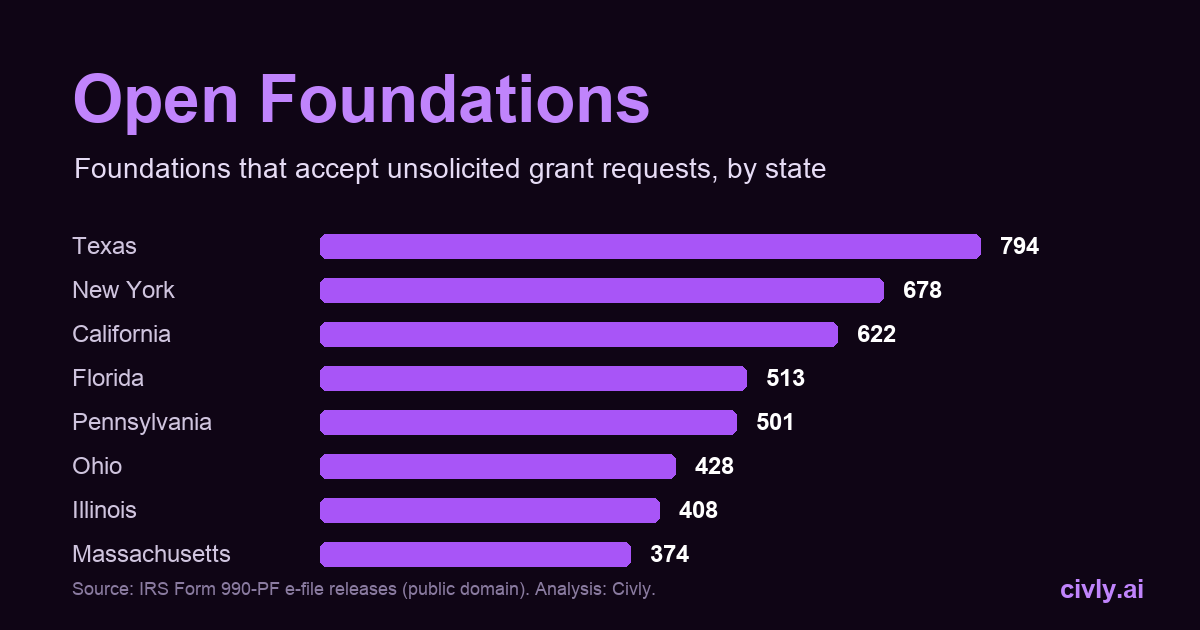
Foundations that accept unsolicited grant requests, by state: Texas 794, New York 678, California 622, Florida 513, Pennsylvania 501, Ohio 428, Illinois 408, Massachusetts 374
Interactive

Which Foundations Accept Unsolicited Grant Requests?

Every private foundation states on its tax return whether it will read a request it did not invite. Of the 131,545 that answer, 27,218 say yes, about 21%. Nobody publishes that list, so we built it from the Form 990-PF filings: 8,971 foundations by state, with the deadline, the restrictions, the contact and every grant paid.

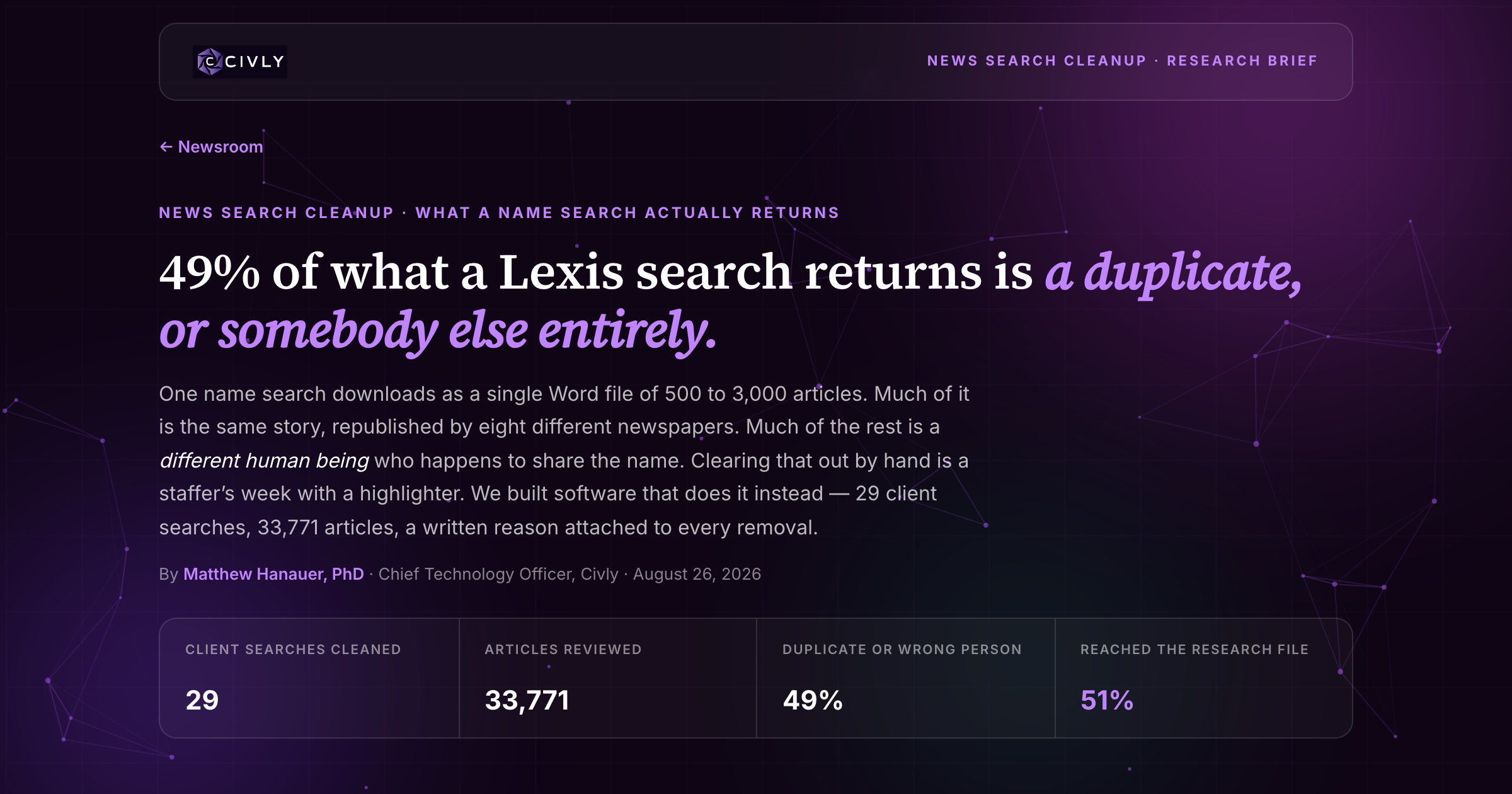
Across 29 client LexisNexis searches and 33,771 articles, 49% of what came back was a duplicate of another article in the same file or about a different person entirely
Research

A Name Search Is Not a Research File

A Lexis name search matches letters, not people. Across 29 client searches and 33,771 articles, 49% was a duplicate or somebody else entirely. Duplicates run at a steady 31%. Wrong‑person hits swing from 1% to 94%, and the candidate’s name decides which — in one race, 2,997 articles produced 115.

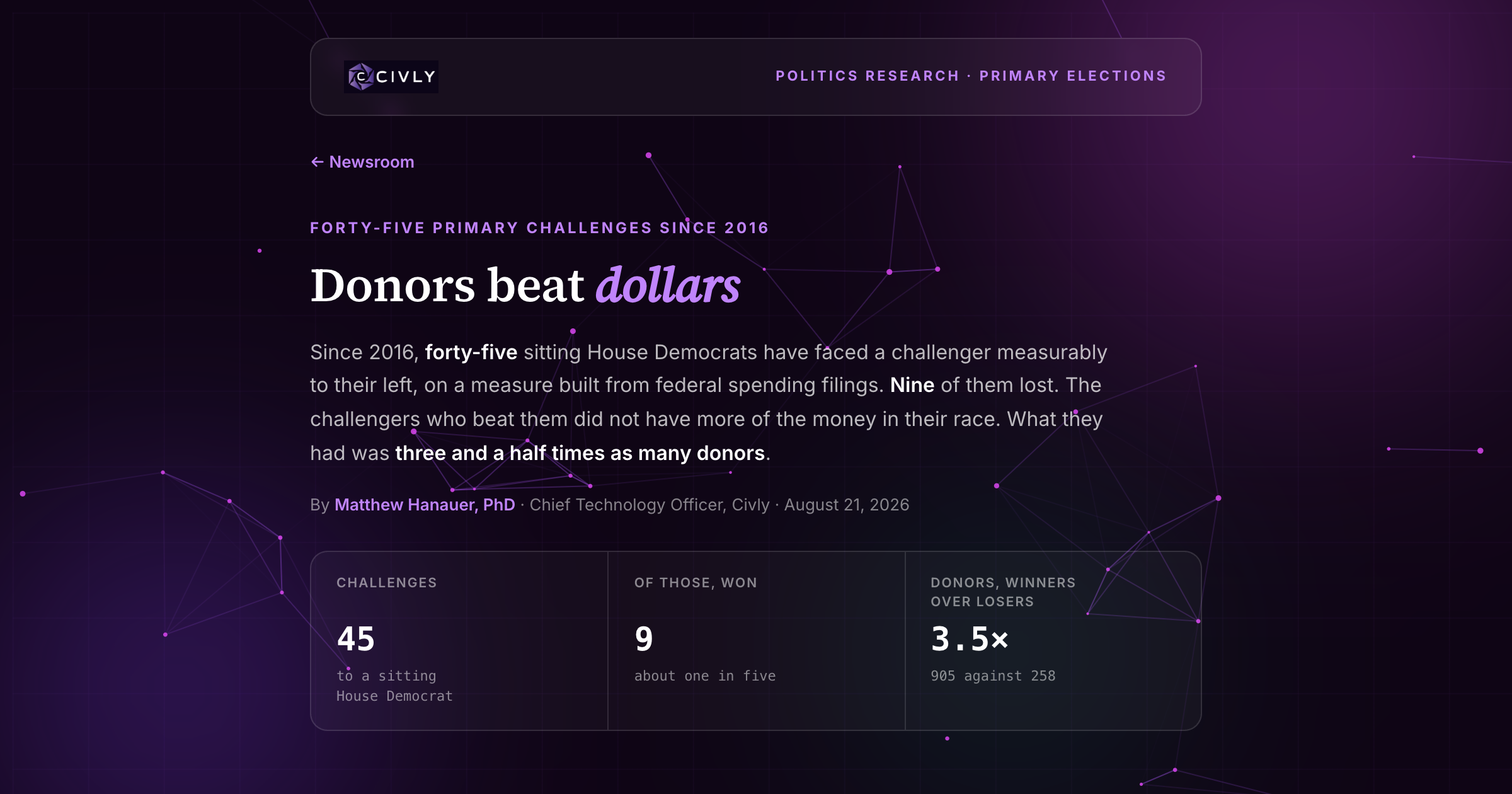
Nine of forty-five progressive primary challenges to sitting House Democrats have won since 2016; the challengers who won held 28.1% of the money raised in their race against 31.1% for the ones who lost, and had 3.5 times as many donors
Research

Donors Beat Dollars

Since 2016, 45 sitting House Democrats have faced a credible challenger measurably to their left, and nine of them lost. Money did not separate the two groups — the challengers were outspent roughly 2.5 to 1 whether they won or lost. Donors did: a median 905 against 258.

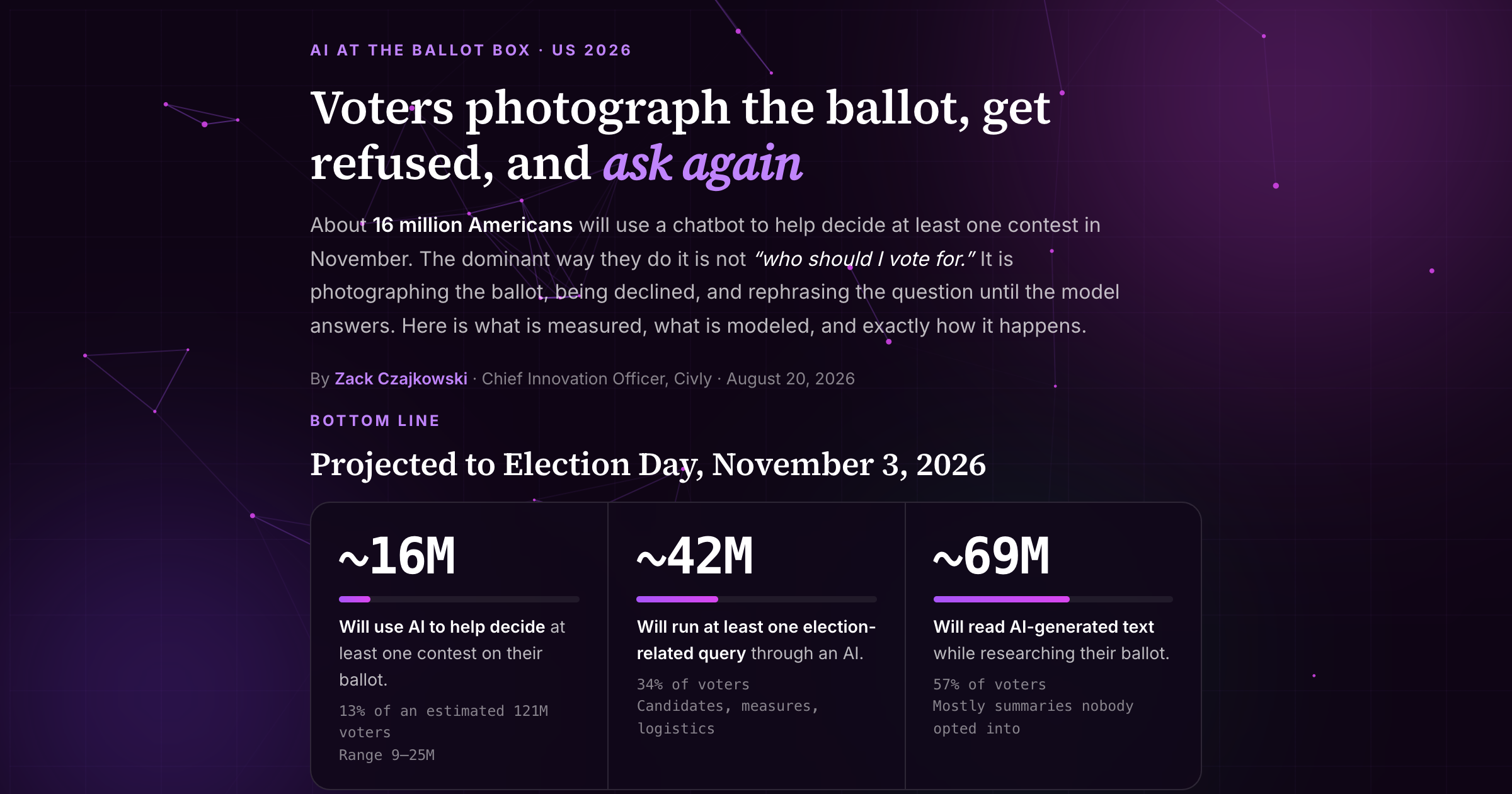
About 16 million American voters will use a chatbot to help decide at least one contest in November 2026, 42 million will run an election-related query through an AI, and 69 million will read AI-generated text while researching their ballot
Research

Voters Photograph the Ballot, Get Refused, and Ask Again

About 16 million Americans will use a chatbot to help decide at least one contest in November — and the dominant way they do it is not asking who to vote for. It is photographing the ballot, being declined, and rephrasing until the model answers. Where it lands runs inverse to attention: negligible for Senate, decisive for the judicial and county races that carry no party cue at all.

Modeled vote-share change from doubling contributing organizations at fixed total dollars: plus 1.11 points for challengers and minus 0.48 for incumbents
Research

Donor Breadth and Vote Share: Challengers vs. Incumbents

In a model of contested congressional races from 1980–2024, doubling the number of contributing organizations while holding total dollars fixed changed predicted vote share by +1.11 points for challengers and −0.48 for incumbents. The estimates describe associations, not the effect of recruiting more donors.

Thirteen sports signings where the warning was already in a court file, a published suspension or a video on the news before the contract was signed
Research

Thirteen Sports Hires With Warnings Before Signing

Thirteen sports hires where a warning was documented before the contract. Each case records the information available, how long before signing it appeared, and the reported cost or consequence.

Union political spending compared with ballot-measure results, pro-labor bill sponsorship and passage, floor votes, and close-election outcomes
Research

Union Political Spending: Five Outcomes Examined

Union-backed sides won 33 of 49 ballot measures. Funded legislators sponsored 4.2× as many pro-labor bills as unfunded colleagues, but passage rates were similar. The study also compares floor voting and close-election results.

Campaign Trend Podcast
Media August 12, 2026

Can You Trust a Poll No Human Ever Took?

Civly CTO Matthew Hanauer joins Eric Wilson on the Campaign Trend Podcast to discuss synthetic polling: testing models against certified election results, choosing question formats, and assessing when additional data helps. They also discuss uses in down-ballot races and message testing.

NIL roster-pay study of 112 athletes: production and program scale were associated with pay; follower count and engagement rate had no detectable association
Research

Do Followers Raise NIL Pay? We Can’t Detect an Effect

A study of 112 athletes with published contract values of $500K to $6.5M found no detectable relationship between Instagram audience and roster pay after accounting for performance and program scale. The results concern school and collective payments; brand deals are a separate market.

Booster foundations raised $1.69B against NIL collectives' $98.6M across the Division I programs whose funders Civly could verify
Research

NIL Collectives Are 5.5% of the Money

We linked federal athletics records with IRS Form 990s for funders of 54 Division I programs. Booster foundations reported $1.69B in revenue, compared with $98.6M for NIL collectives, a ratio of 17 to 1.

Five AI models simulated 6,400 voter profiles across eight past elections. The panel average had the lowest typical error across seven races, about 1 point.
Research

Averaging Five AI Models Reduced Polling Error

Five models from five labs simulated the same 6,400 voter profiles across eight past elections. The panel average had a typical error of about 1 point across seven races. Disagreement was greatest on the eighth, which all five models misread.

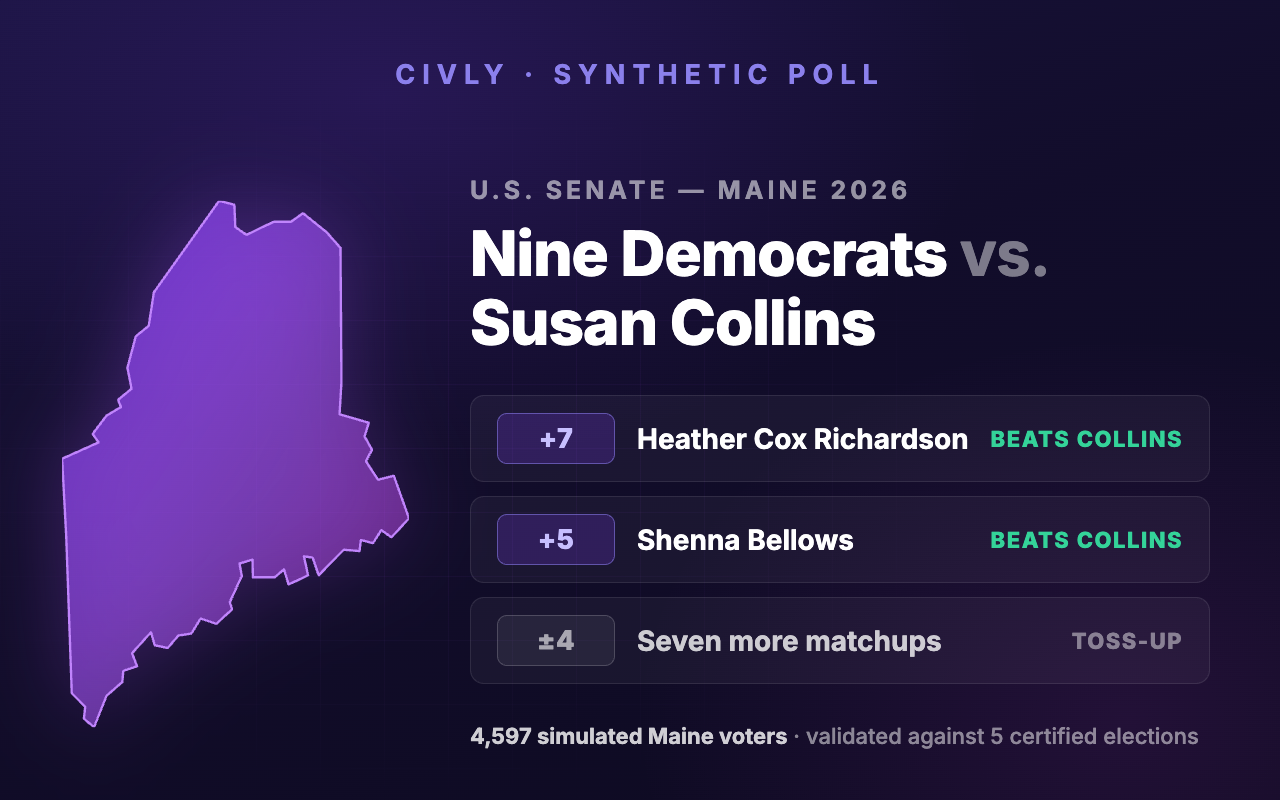
Civly synthetic poll: nine potential Democratic nominees against Susan Collins in Maine's 2026 Senate race
Synthetic Polling

Maine 2026: Nine Democrats Against Susan Collins, Simulated

We simulated nine potential Democratic replacements for Graham Platner against Susan Collins using 4,597 registered-voter profiles. Richardson and Bellows led by more than the method's typical error of 4.1 points. The other matchups were within that range.

The Civly Turnout Score
Research

Testing the Civly Turnout Score Against Past Voting History

The Civly Turnout Score classified voter turnout correctly 84% of the time across nine states in the 2024 general election, compared with 78% for a rule based on past participation. In a low-turnout municipal race, accuracy was 83% versus 67%.

Civly Synthetic Polling scorecard: 9 of 10 winners called correctly in the 2026 New York and Maryland House primaries
Synthetic Polling

Civly Forecast Called 9 of 10 Primary Winners

Civly published AI-based forecasts for the contested New York and Maryland House primaries before voting began. Nine of ten winner calls matched the certified results. The scorecard includes the method and the missed call.

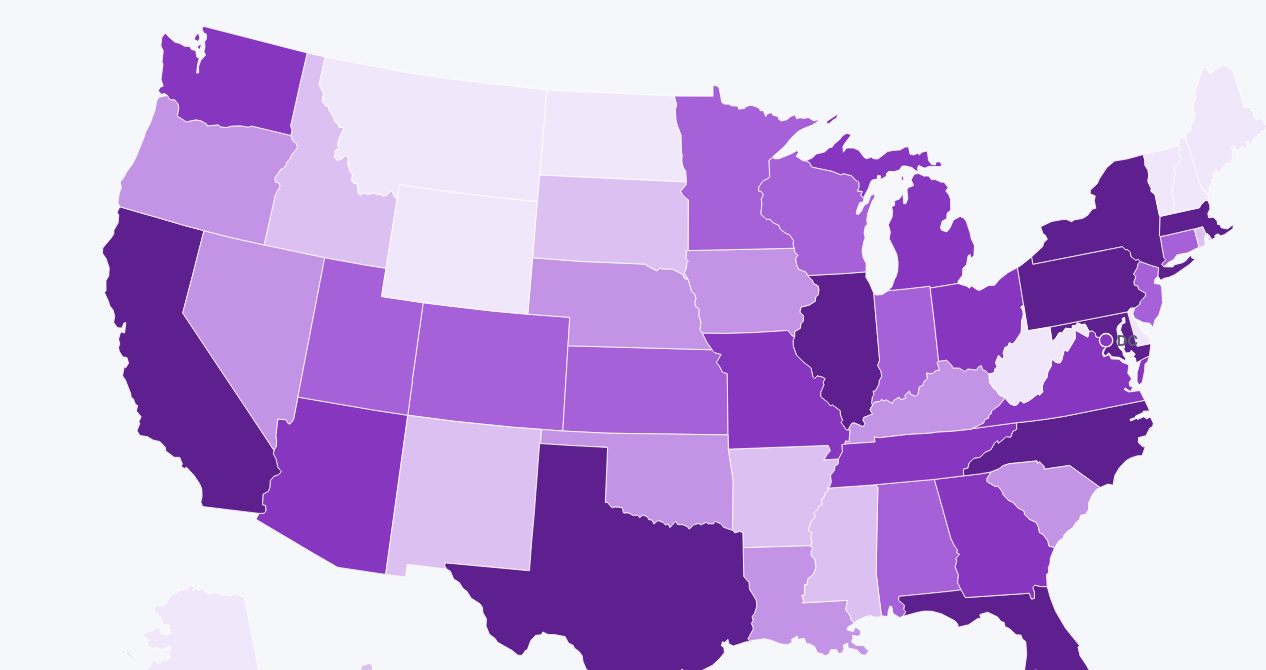
Interactive U.S. map of drug and device company payments to physicians by state
Interactive

What Do Drug & Device Companies Pay Your Doctor?

Explore $78 billion in reported payments to U.S. physicians and teaching hospitals from CMS Open Payments, 2018–2024. Browse by state, congressional district, or county, or search for a doctor by name.

Democratic Autopsy and AI
Media June 9, 2026

Democratic Autopsy and AI

In The Fulcrum, Civly CEO Daniel Barkhuff argues that the DNC's 192-page review of the 2024 election should have addressed AI's role in campaigns and how voters receive information.

Civly
Press Release

192 Pages on How Democrats Lost. Zero Mentions of AI.

Civly's review of the DNC's 192-page post-election report found no mention of artificial intelligence. The article sets out the company's position on AI adoption, verification, and protections for children.

How a Startup is Using AI to Streamline Opposition Research
Media February 6, 2026

How a Startup is Using AI to Streamline Opposition Research

Campaigns & Elections reports on Civly founder Dan Barkhuff's use of AI to compile property records, criminal histories, campaign-finance data, and social media for opposition research.

So Here's What I've Been Up To
Blog & Insights January 30, 2026

So Here's What I've Been Up To

Daniel Barkhuff announces Civly.ai, a political technology company providing research and campaign tools for Democratic organizations.

Civly
Press Release

Civly Launches AI-Powered Campaign Intelligence Platform

The North Carolina startup launches Research Books, Command Center, and Compliance, with candidate research delivered in days.

Media Inquiries

Contact our team for interviews, press inquiries, or information about Civly.

Contact Us